

How To Draw A Small Dragon
This post has been originally deputed for SketchBook Web log in 2022. Afterwards the site'due south migration, the original is no longer available, just yous tin still admission the content here. Enjoy!
Permit's exist honest — dragons can capture our imagination like nothing else. Powerful, magical, and, unfortunately, unreal. We can bring them to our world with drawing, merely how to make them realistic if nobody knows what they look similar? Really, we kind of do. We all take a certain vision of what a dragon should look like, which makes it even harder to create a consequent image of them. That'southward why in this tutorial I will not show you how to depict a specific dragon — instead, I volition give you solid basics to blueprint your own, personal species of them.
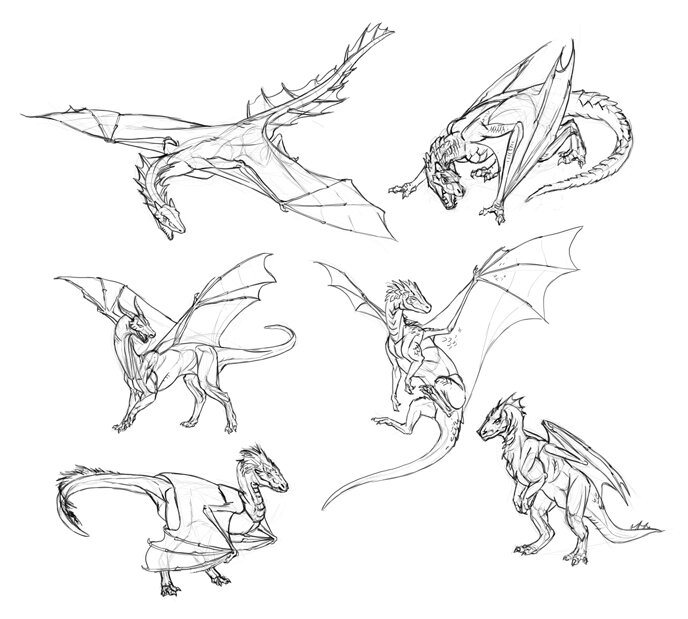
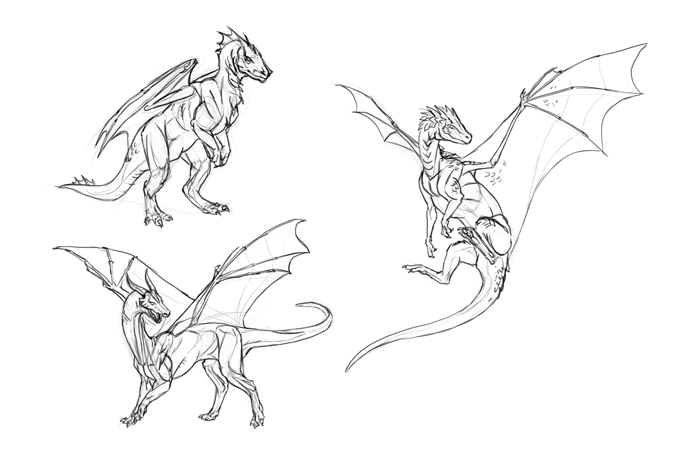
Once you've mastered these basic techniques, you lot'll be able to create lots of creative dragon variations similar these I drew while making this tutorial.
General Anatomy: Two Kinds
Dragons aren't real, but if we want them to look like something living in our reality, their design must obey sure rules. That's how nosotros make up one's mind if a creature is believable or not. The all-time style to ensure believability of an unreal creature is to base its design on the beefcake of existent animals. If we look at the evolutionary tree, we can place dragons in two possible groups: saurischians (the dinosaurs that birds came from), and therapsids (mammal-like reptiles). Permit's accept a look at their possible anatomies.
Saurischian Dragon
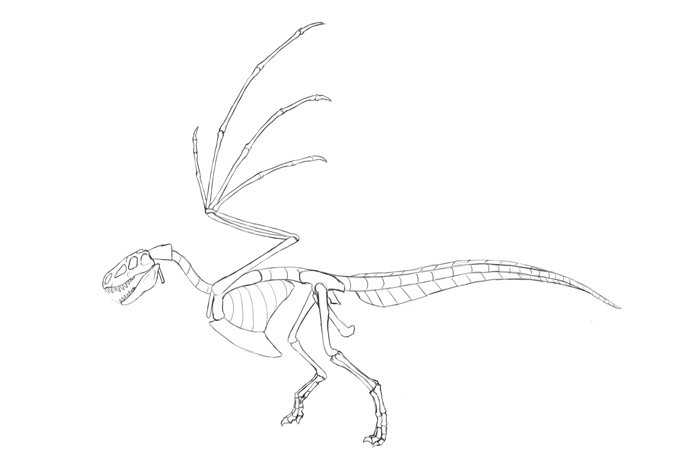
This could be a saurischian species that evolved membranous wings. They were created without hands, so this dragon doesn't have arms. Probably all carnivorous saurischians were bipedal, then the forelimbs were redundant anyway. We phone call four-limbed dragons wyverns, and some people don't consider them dragons, but a unlike kind of mythical fauna. Yet, this type of dragon design is actually the almost plausible, and that's how they're often portrayed in the popular culture today (See Skyrim, Game of Thrones, the Hobbit, Harry Potter series).
Remember to keep the tail long, meaty, and quite strong—information technology'due south used for residue. There's no other brute today that moves like dinosaur saurischians, so you can't really base of operations the movement on anything else. Merely you tin use two simple rules: the femur can't become back farther than 90 degrees, and the feet usually copies its angle.
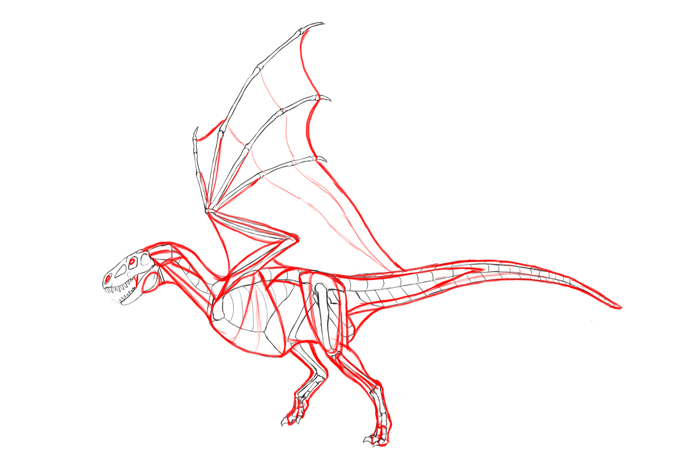
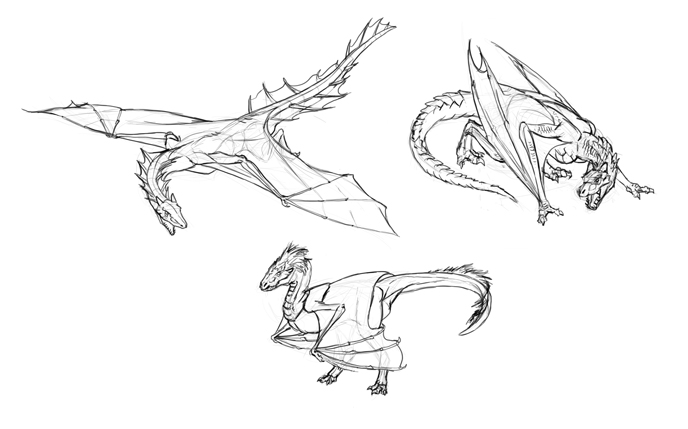
There are many different designs you lot can base on this beefcake. For case, your "wyverns" tin apply their wings for walking. Feathers are acceptable as well in this evolutionary line.
Therapsid Dragon
This i has a different story. It'due south closely related to mammals, so it can movement similar them and be quite intelligent. Information technology'due south quadrupedal like most mammals, and so it can't cede its forelimbs for the sake of wings. Instead, a special mutation has gifted them with an boosted pair of limbs (it really happens in nature; see dipygus). It'south very hard to place those additional limbs in a plausible way, and the whole design is very unrealistic when you compare it to near "existent" creatures. Even so, it's a very bonny vision. It tin can be brought to life in a convincing way (E.m., Dragonheart, Eragon, Dungeons & Dragons).
The tails of therapsids are flexible and are used more for communication than for rest. Dragging it on the basis is fully allowed. To understand how this kind of dragon moves y'all can find movement of big cats.
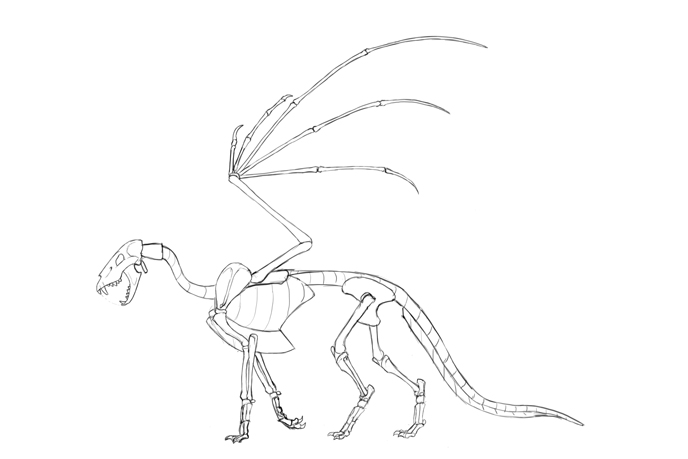
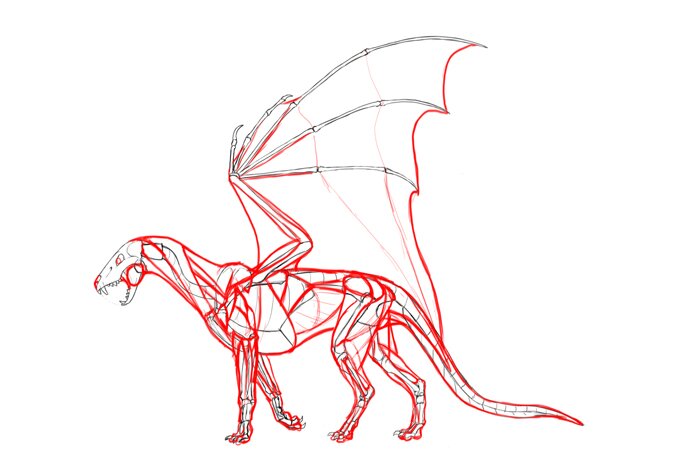
Once again, in that location'due south no demand to copy this beefcake 1:1. You tin can experiment to create many fun designs, all very different. Go on in listen that fur is acceptable in this evolutionary line!
Dragon Skeleton
To depict a dragon properly you demand to start with a few simple lines based on its skeleton. Skeleton gives course to the body and establishes the proportions before you invest whatsoever time in details. Evidently, both "species" will need a dissimilar skeleton:
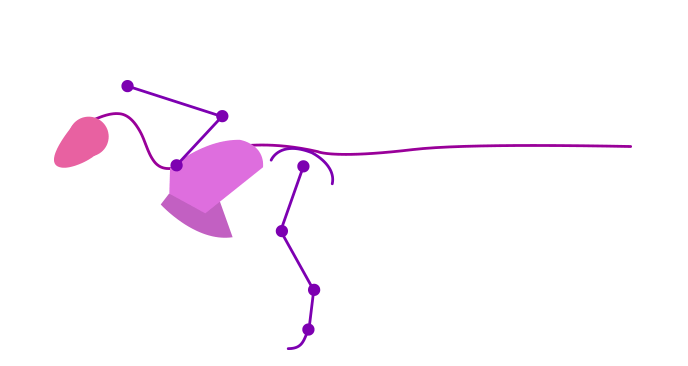
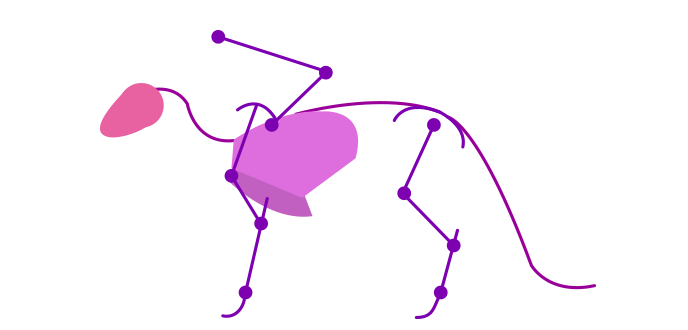
Yous don't need to know the names of the bones, or the exact shape of them. Yous just need to know the general proportions, the placement of joints, and the limitation of their movement. Yous can learn a lot past sketching the animals your dragon is based on.
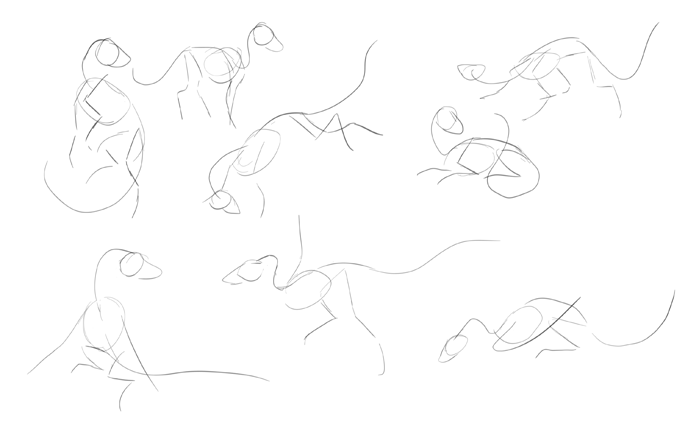
And here's how you can get-go your drawing. You lot don't demand to stop out the outset sketch that turns out well. Experiment, create many sketches, and then pick the one that you like the nearly.
Dragon Muscles
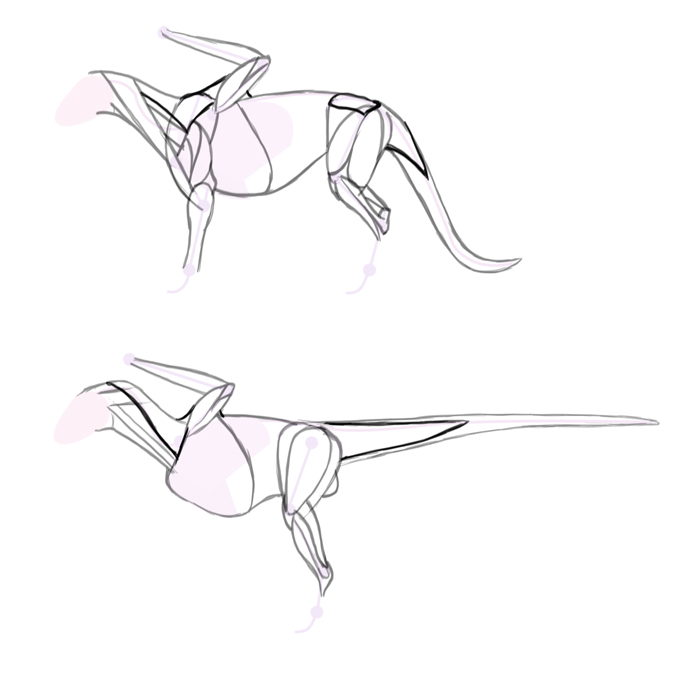
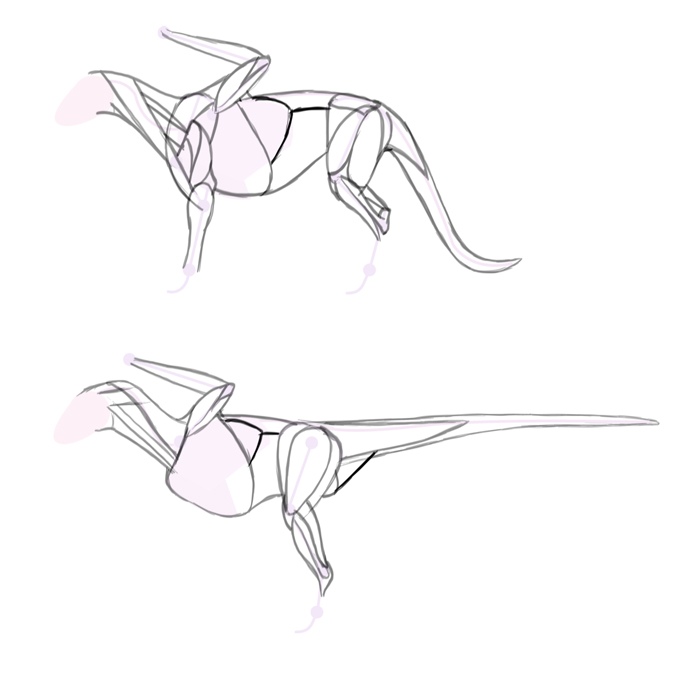
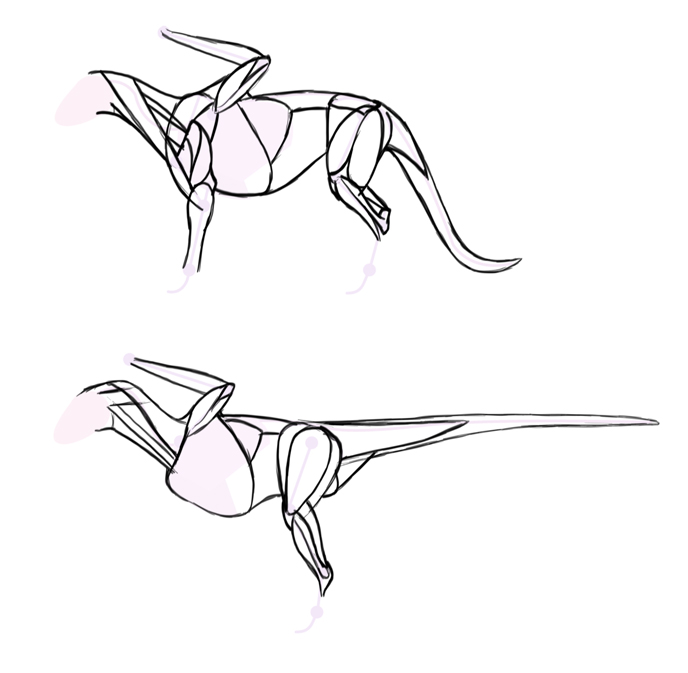
Muscles requite book to the trunk and brand the beast look stiff and powerful. They're also very hard to draw. If yous want some kind of reference, y'all tin can try the illustrations below. However, I'll likewise evidence yous how to sketch the muscles pace past stride.
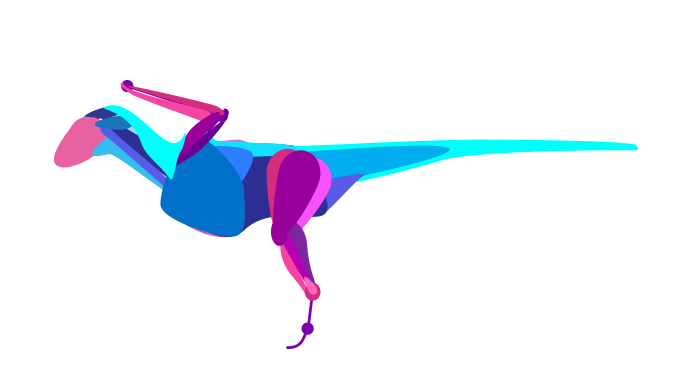
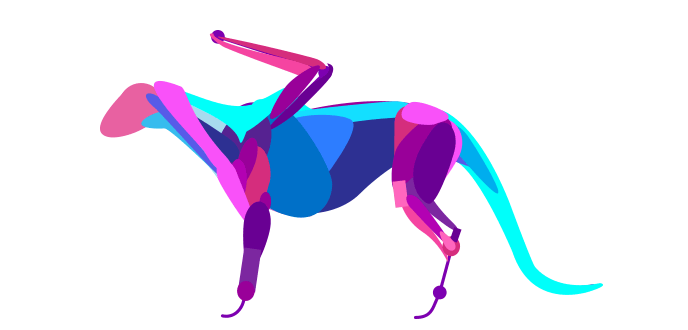
Starting time by giving a very general outline to the front side of the limbs. Add the back part.
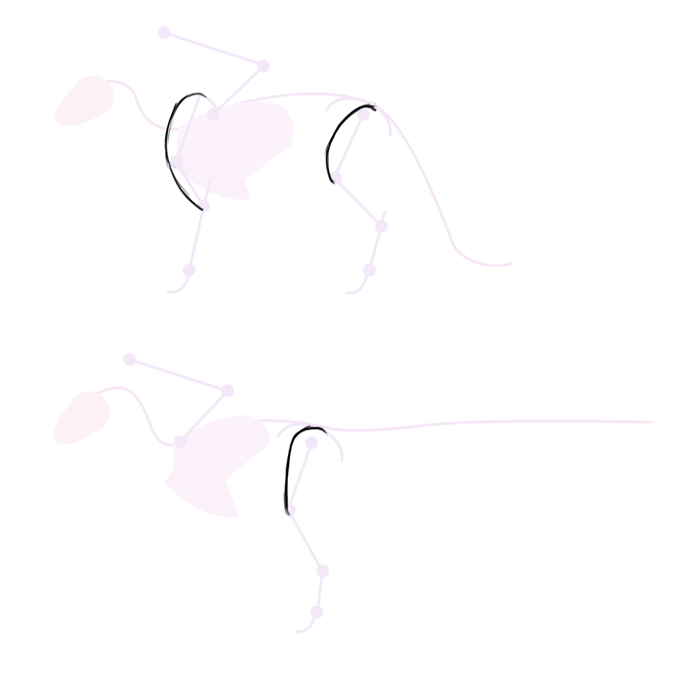
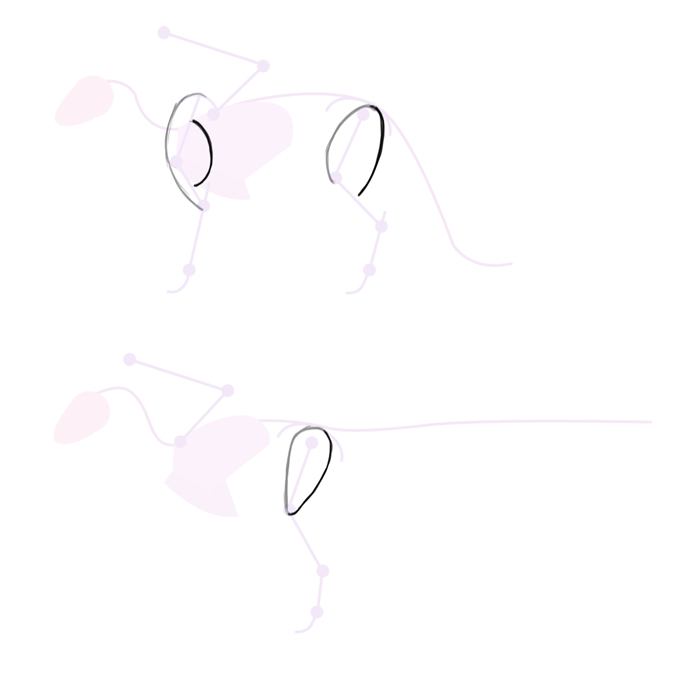
Outline the thinner parts of the limbs. Add together "supporting" muscles of the upper limbs. Add "supporting" muscles of the upper limbs.
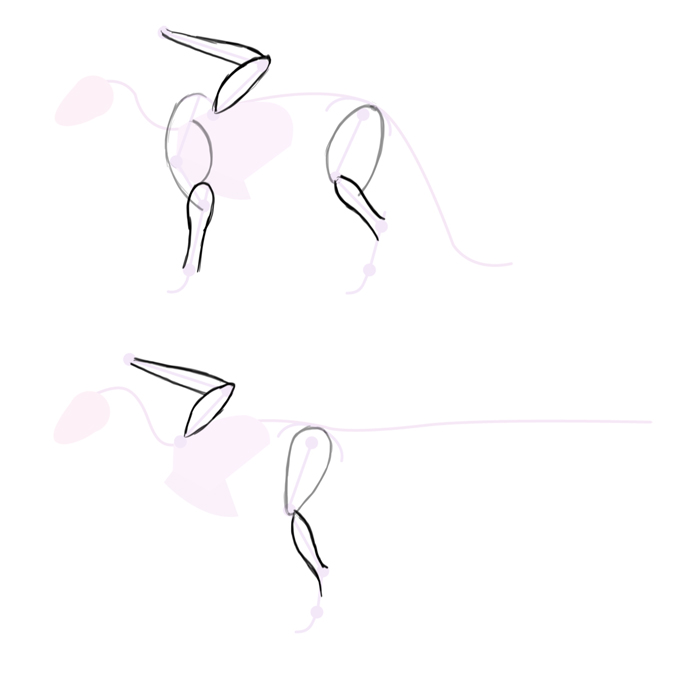
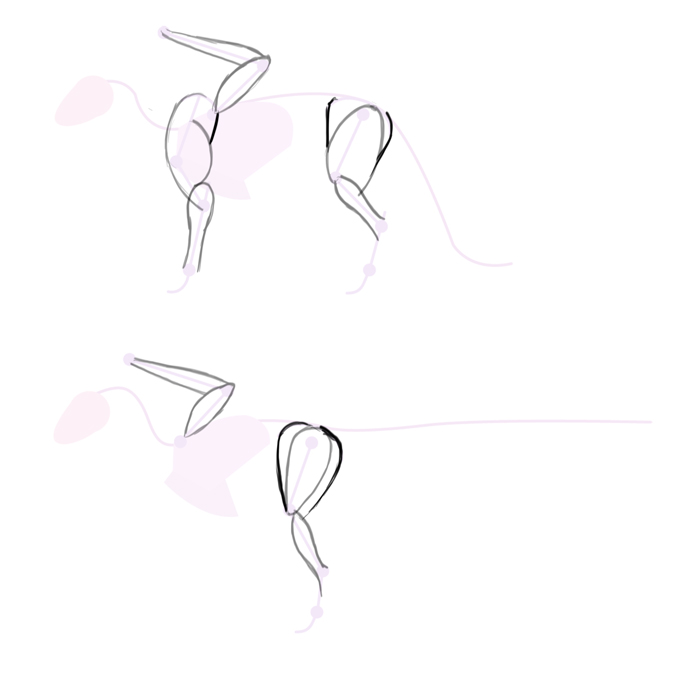
Draw the basic muscles of the cervix. Requite an outline to the balance of the body. Pay special attention to the hips of the saurischian.
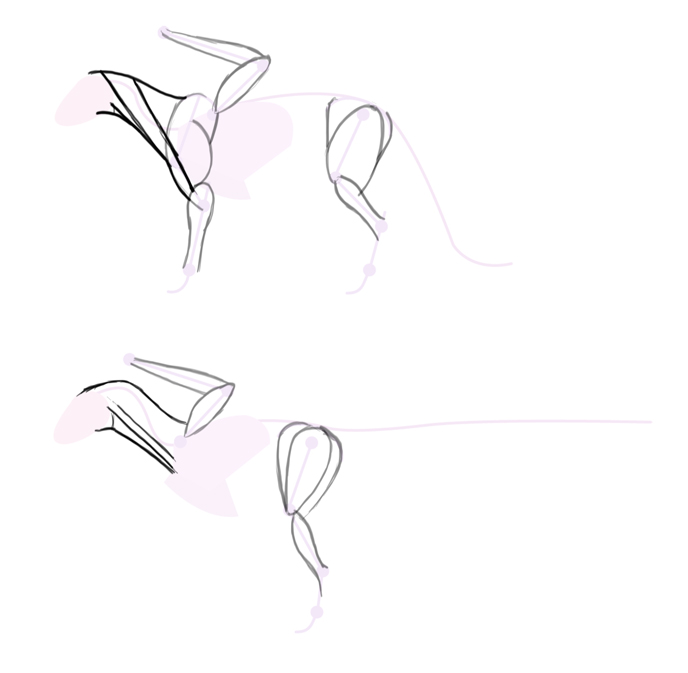
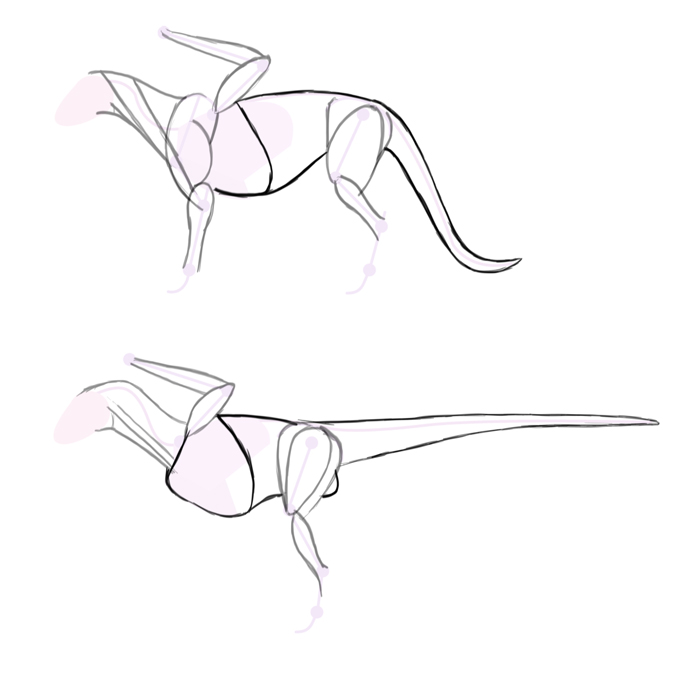
Yous tin stop here if you intend to add a lot of big scales later, considering details of the muscles will not exist visible nether them. But if yous desire, you lot can make the musculature more detailed:
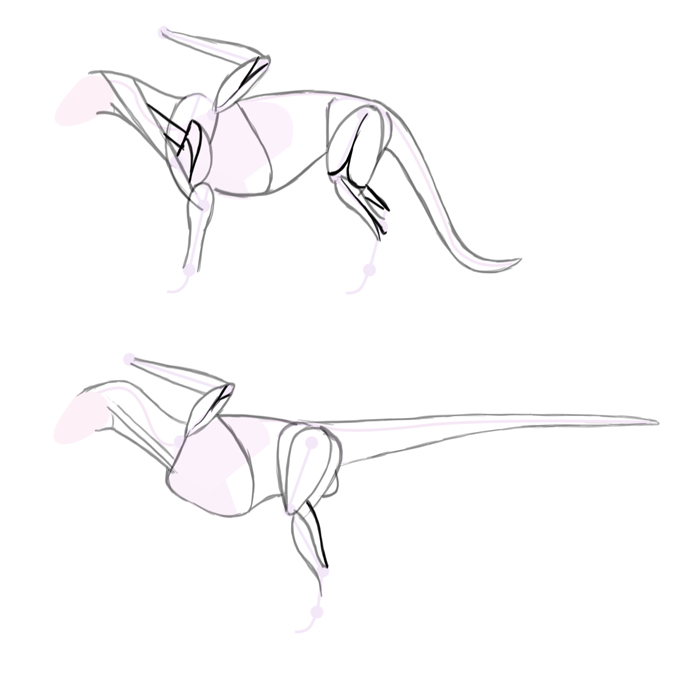
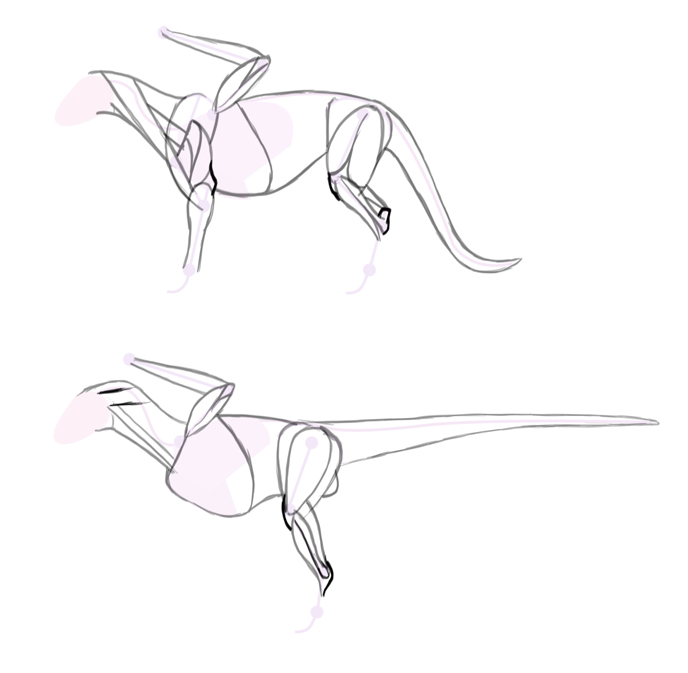
Dragon Wings
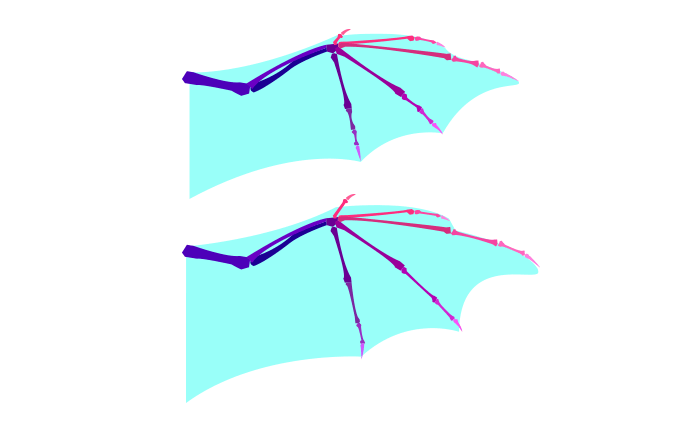
Dragon wings are a complicated bailiwick, too complex to explain properly here. So let me just show you the basics. Bat wings, the only membranous wings in nature today, resemble your hands: You can easily pose the wings past spreading your fingers.
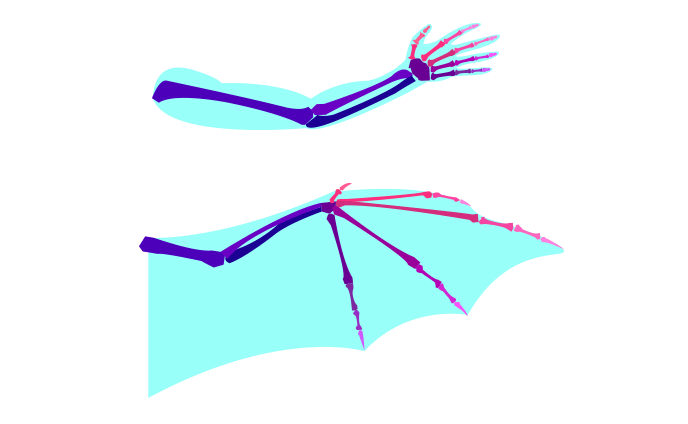
Dragons are much bigger than bats, then proportions of the elements of the wing must be a fiddling different.
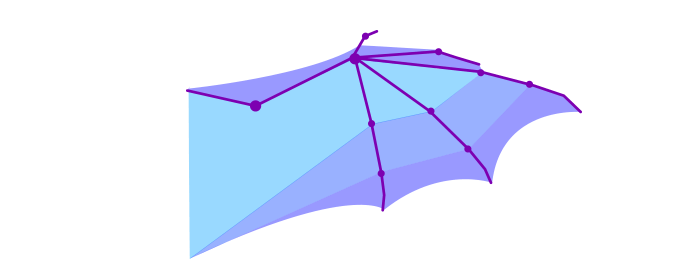
To draw the membrane correctly, imagine "areas of tension" betwixt the joints.
Dragon Feet
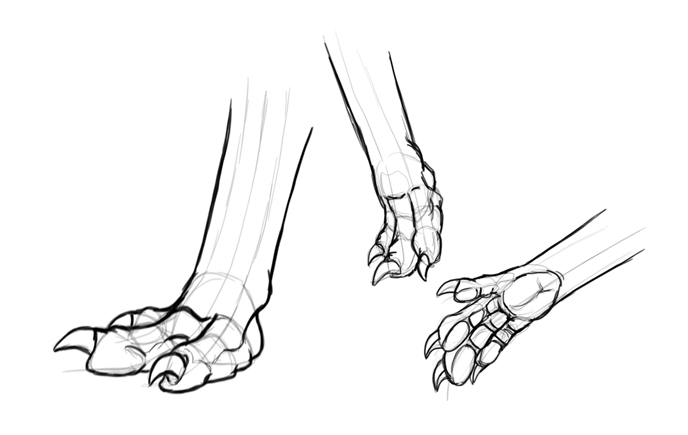
Dinosaurs make a perfect template for many elements of a dragon body, with anxiety being specially proper. They ordinarily have three or iv toes, and each toe has fewer "parts" than the previous 1, counting from the big toe (for dinosaurs it's actually the smallest toe).
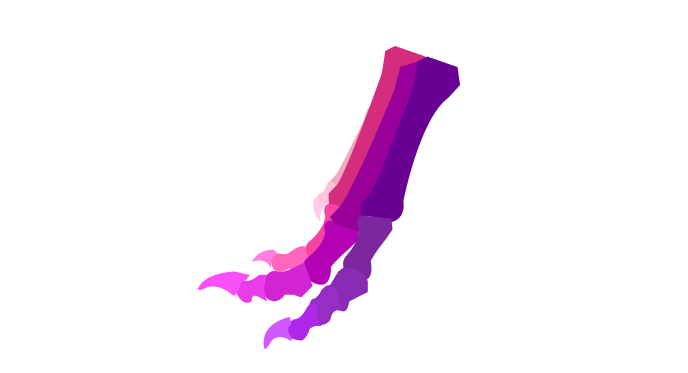
At that place are shock-arresting "pillow" under the toes that give the pes its final form. For a therapsid dragon they may look similar actual mitt pads. In case of saurischian dragons stick to a more bird-similar look.
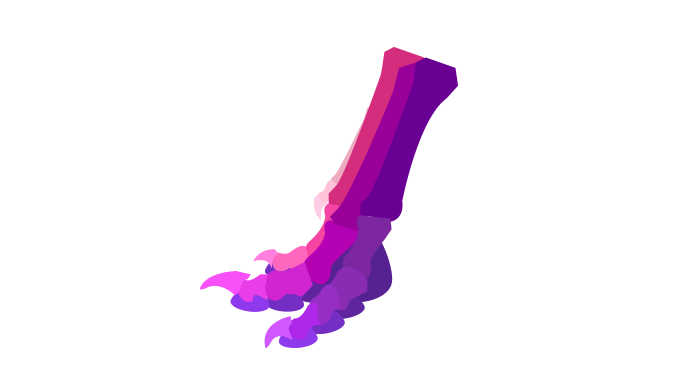
All right, let's draw some feet stride by step:
Showtime with a very general line, like a slice of wire for a sculpture.
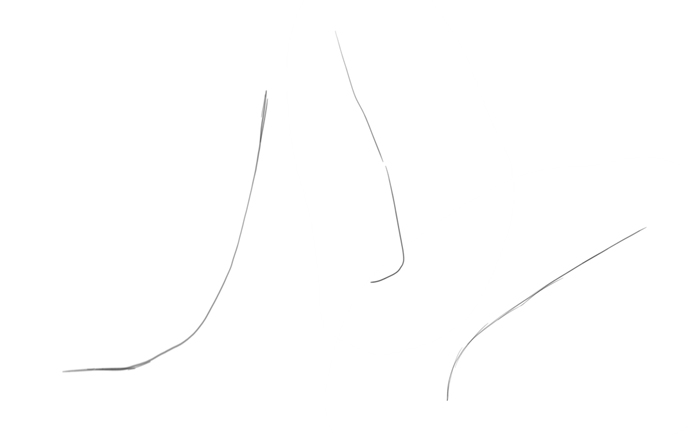
Add the other fingers around. They should be shorter than the 1 in the centre, unless you're going for a directly therapsid look—and so you can use four toes, with two in the middle beingness the longest.
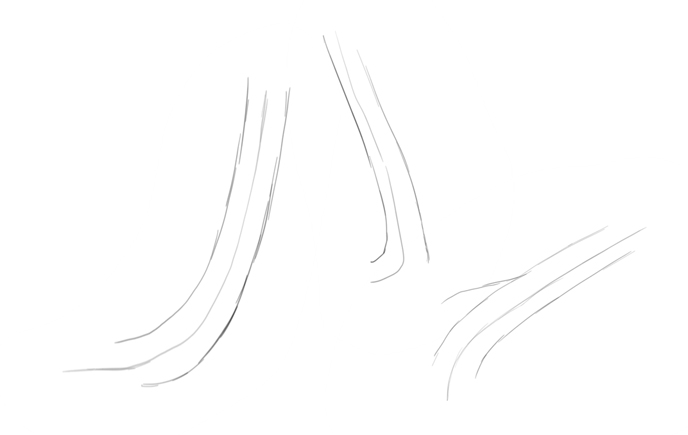
Add the foot pads. That big one is optional and depends on the fashion your dragon sports for walking.
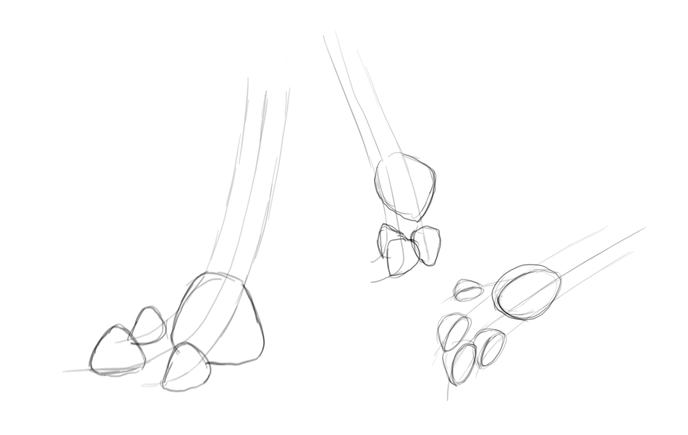
Add together the claws with gentle curves. These curves shouldn't betoken directly to the footing—they can't impede walking!
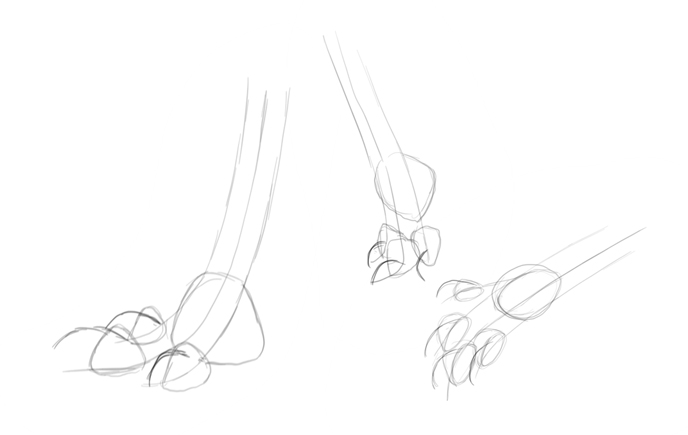
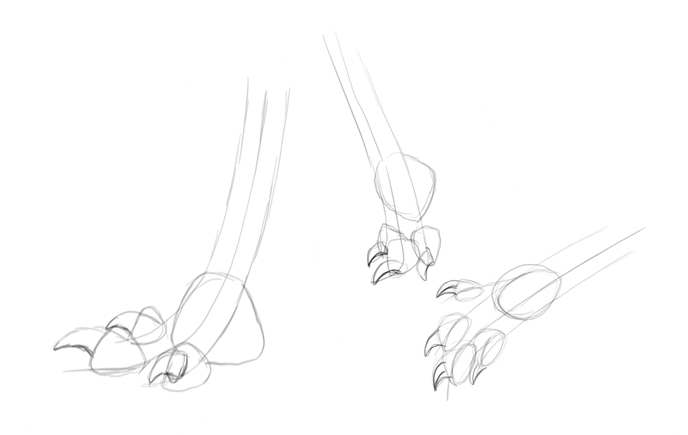
Draw the residue of the toes by creating a line of "marshmallows." Their number should be roughly similar to the number of joints.
Finish the drawing by outlining the details…
Dragon Head
The head of the dragon is not easy to describe, but it's very of import for the final impression. Let'due south see how to describe information technology step by step, using any view you wish:

- No affair which view and which species y'all want to draw, offset with a circle.
- Add a line showing the direction of the snout. You tin can cross information technology with the "eye line."
- Add the eye sockets. For a more difficult view imagine them as two ends of an empty toilet paper ringlet.
- Add a circle to create a basic form of the snout. Use a big circle for a T-Rex look, and a small-scale circle for a "beak."
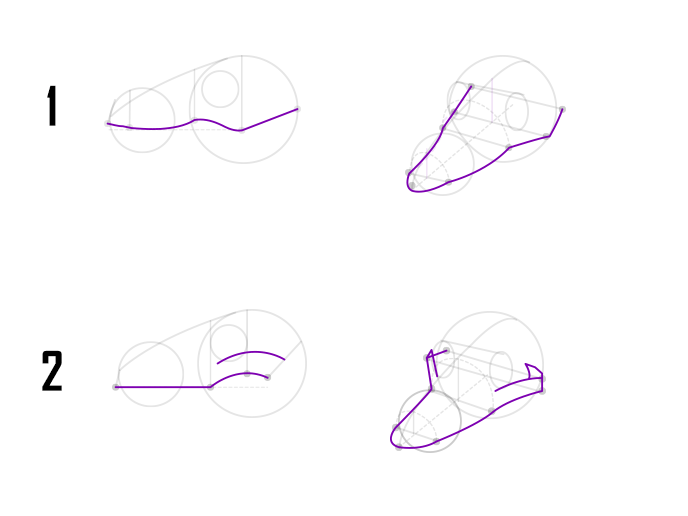
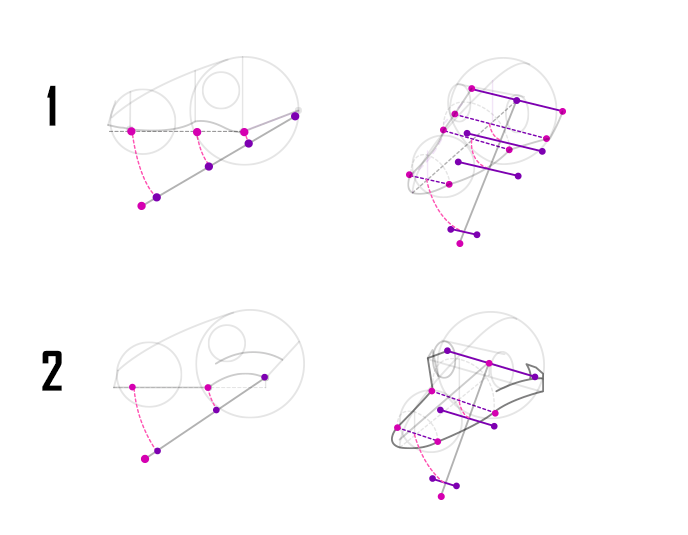
Now we need to go in a unlike way for a saurischian (one) and a therapsid (2), as the skull is the main deviation between them. Describe the points that volition establish the shape of the upper jaw.
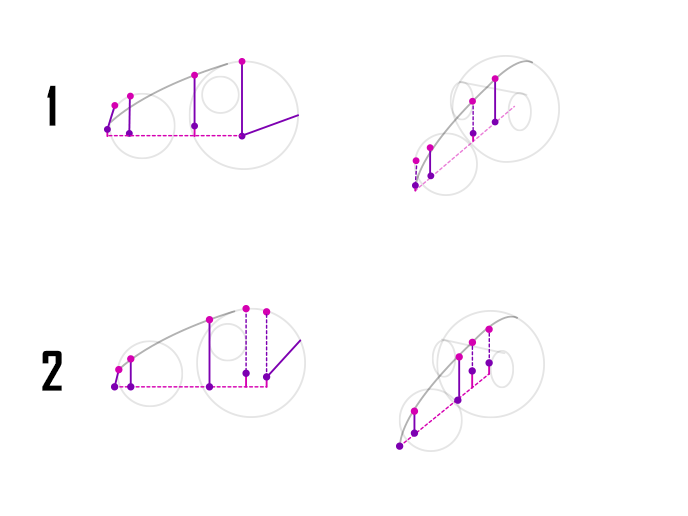
In a 3D view cross these points with lines giving them a certain width. By and large, the snout should be narrower than the braincase.
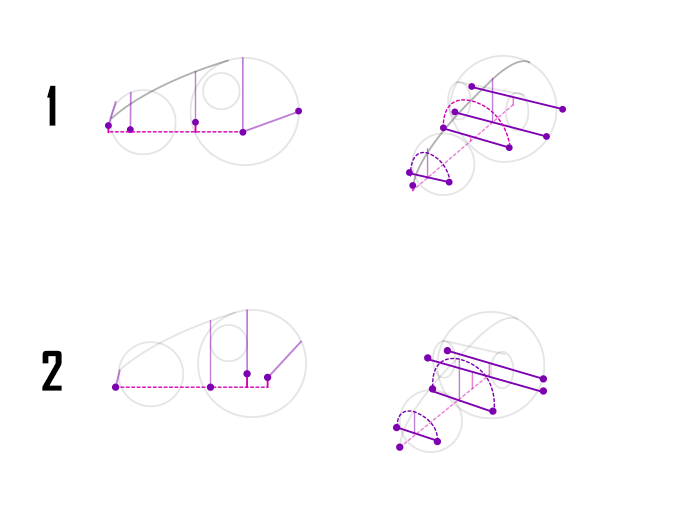
Connect the dots in this special way to create the outline of the upper jaw. Pay attention to characteristic cheekbones of the therapsid.
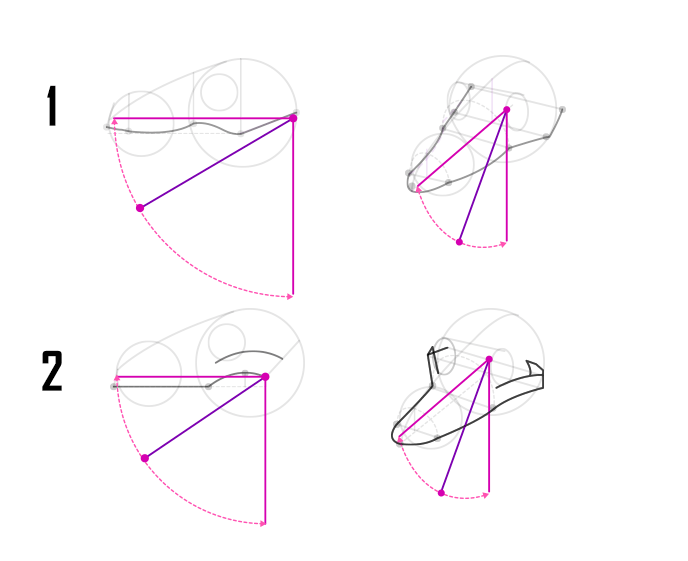
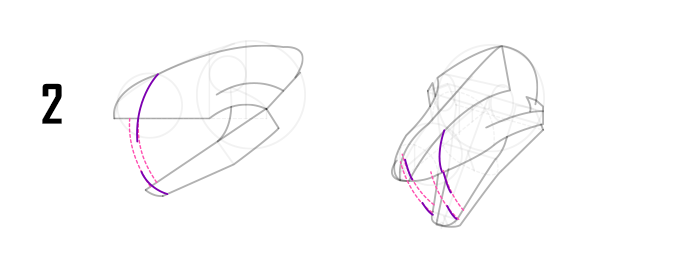
Allow's add together the lower jaw at present. This method is quite complicated, especially in perspective, just information technology's still better than a guessing game. Detect the axis of rotation of the lower jaw (different for saurischian and therapsid), and sketch a fraction of a circle between the virtually extreme positions of the jaw. In perspective, that circle must have a course of a rotated ellipse. Atomic number 82 a line betwixt the "jaw signal" and a point on the circle to define a position of the lower jaw.
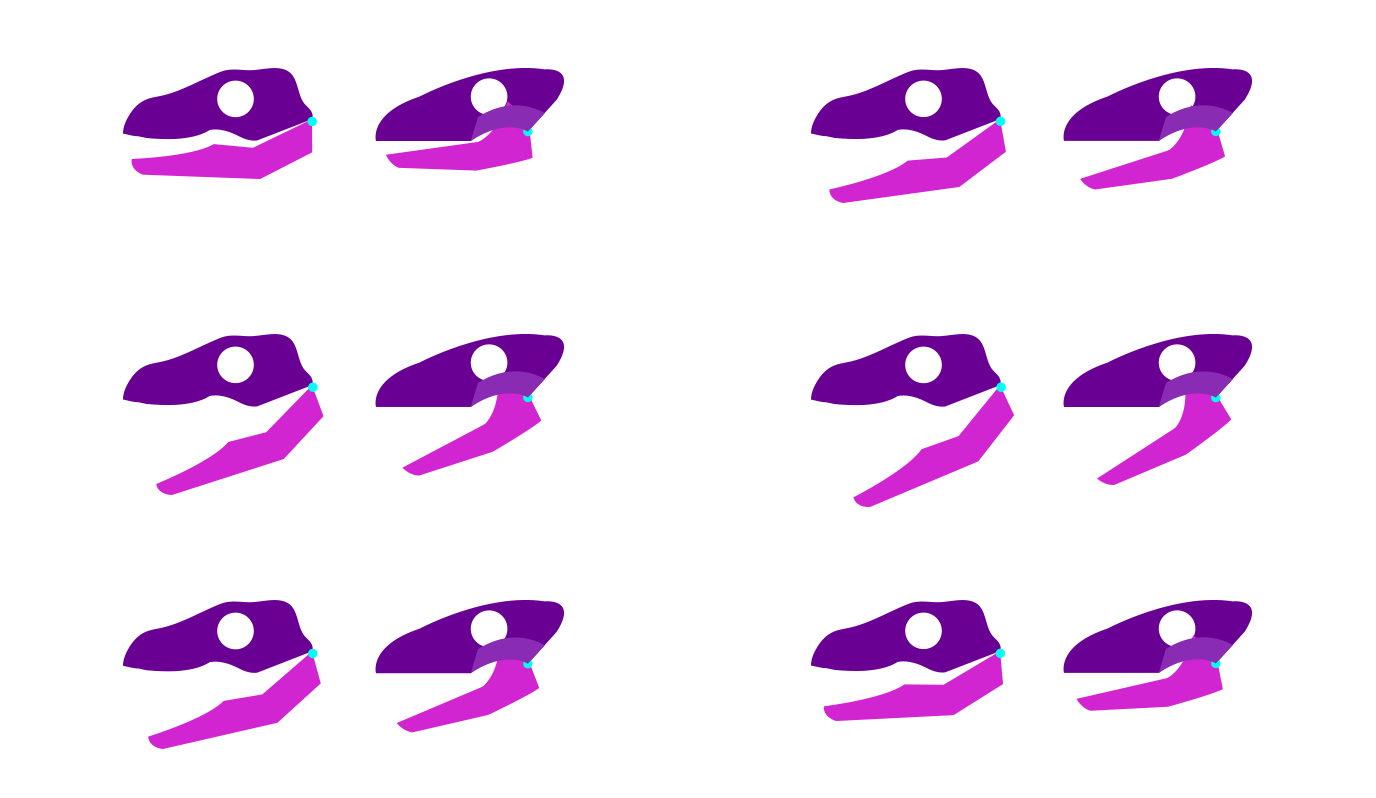
Cast the form-indicating points to the lower jaw.
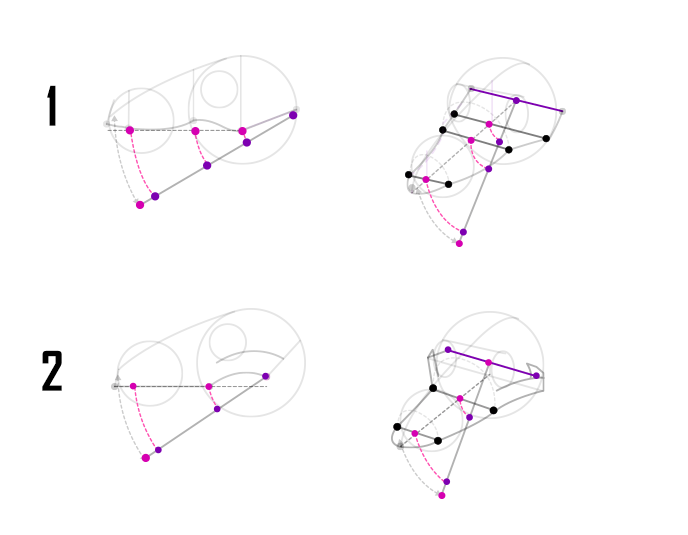
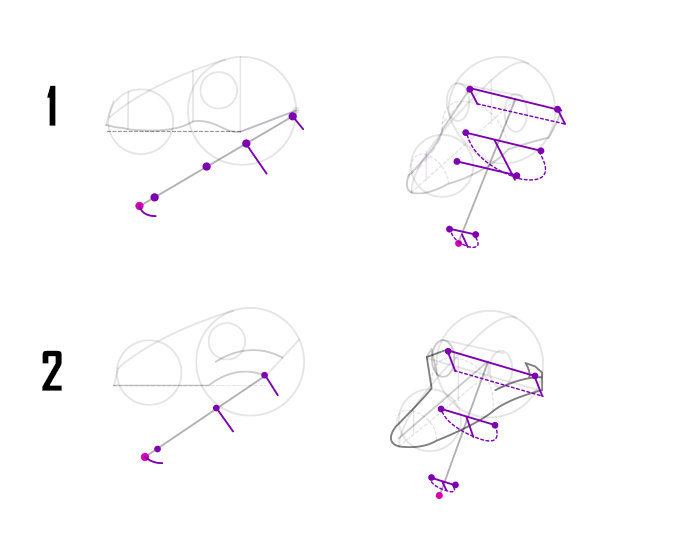
Give the lower jaw a width similar to the upper ane.
The lower jaw needs a depth, too.
Outline the lower jaw using the guide lines y'all have created.
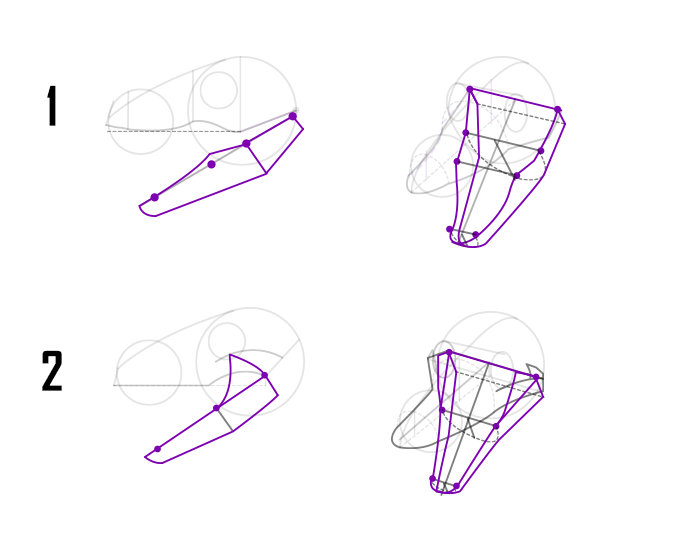
You can at present outline the upper part of the skull also.
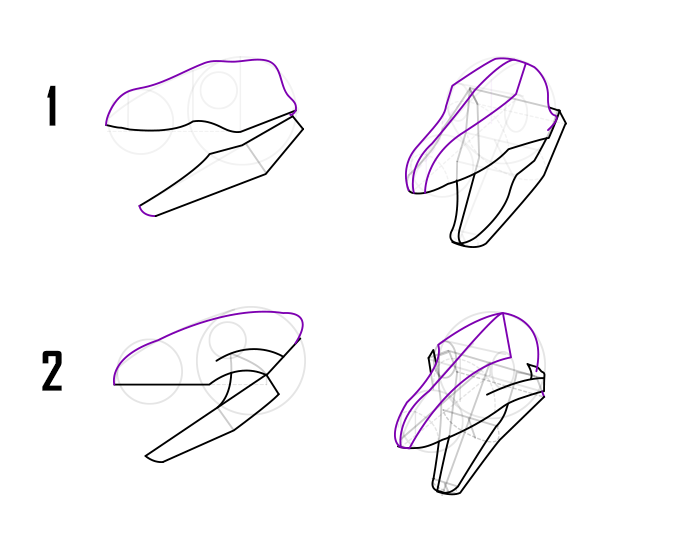
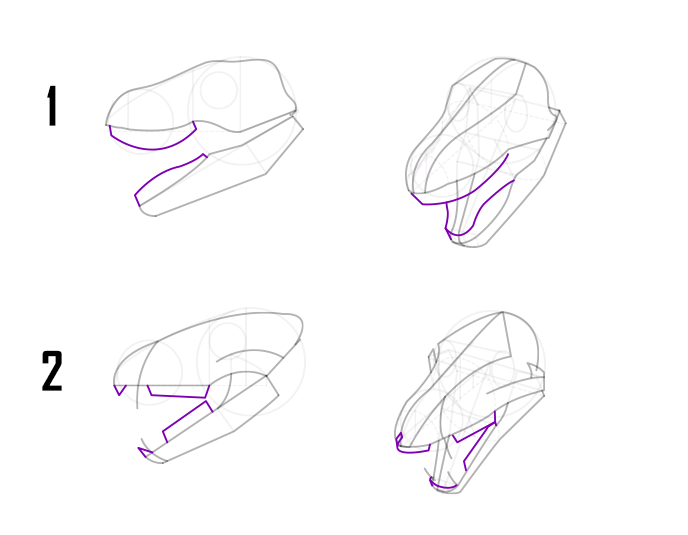
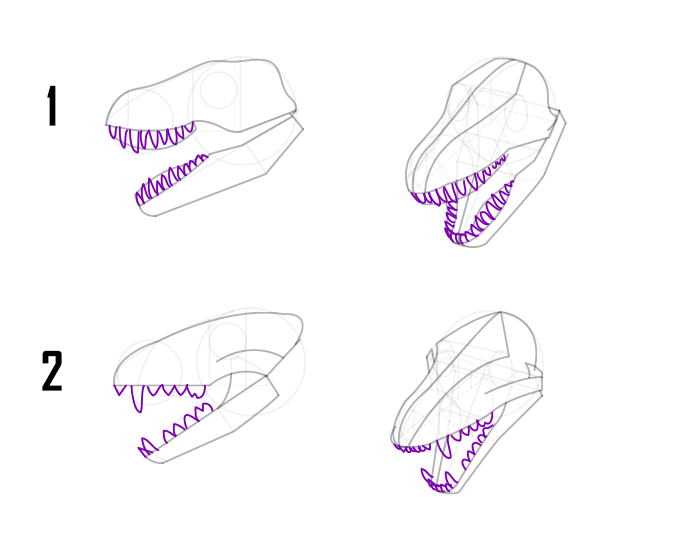
Let's add the teeth now. This is where the two species differ a lot: saurischians don't take specialized teeth like therapsids.
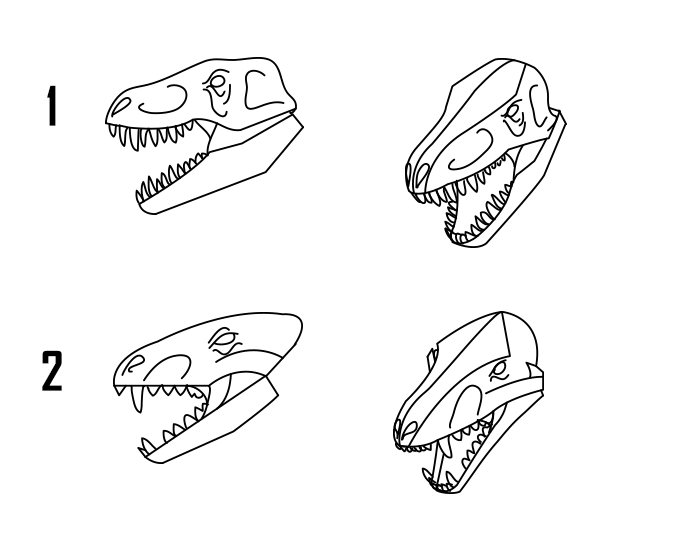
Finally, outline the head and give it final details
Dragon Scales
Scales (or large "plates") are what make dragons unique and differs them from dinosaurs. That'southward why it'southward so important to draw them properly. They seem very time consuming, only if y'all learn i unproblematic rule, you'll be able to add them to your dragons in no time!
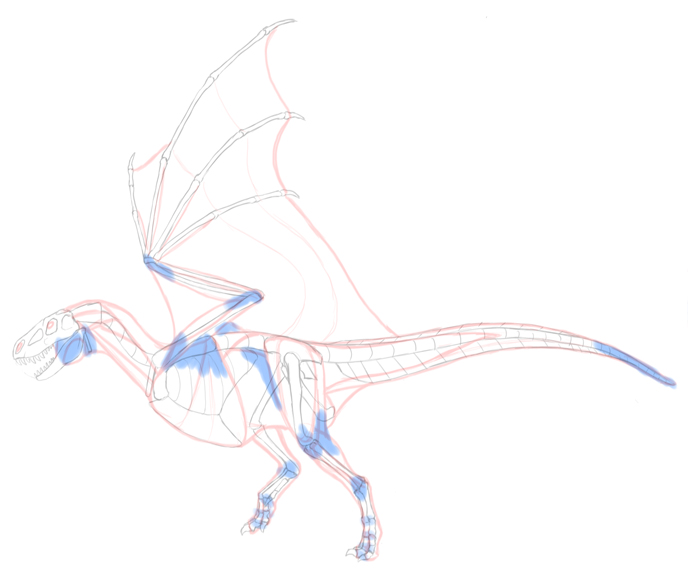
There are two things to consider before nosotros add the scales. Commencement, locate the areas that must be the most flexible and therefore tin't be covered with big scales.
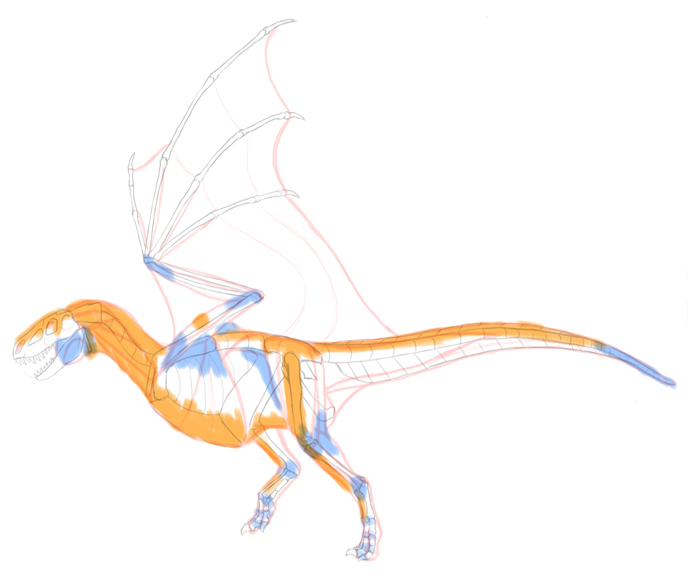
Now, locate the areas that require the biggest protection. Y'all don't need to depict these areas, but make certain you know where they are.
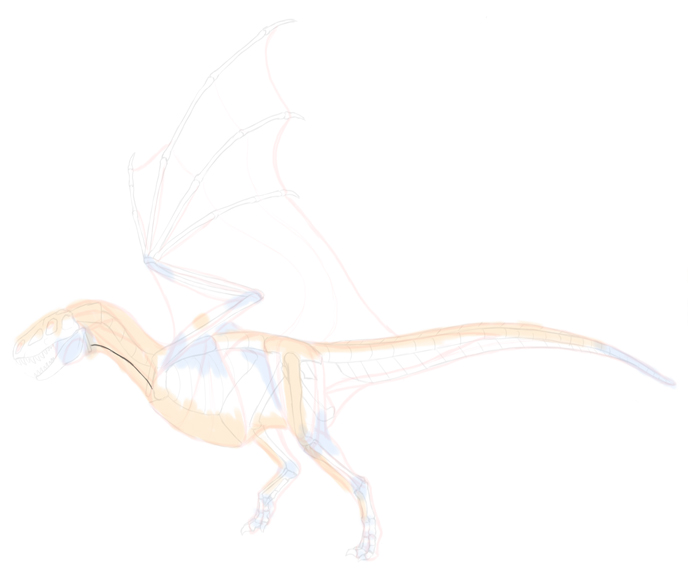
Permit's kickoff drawing now (you tin can download my initial sketch and follow my deportment if you lot want). Draw a line nigh the bottom of the neck, following its rhythm.
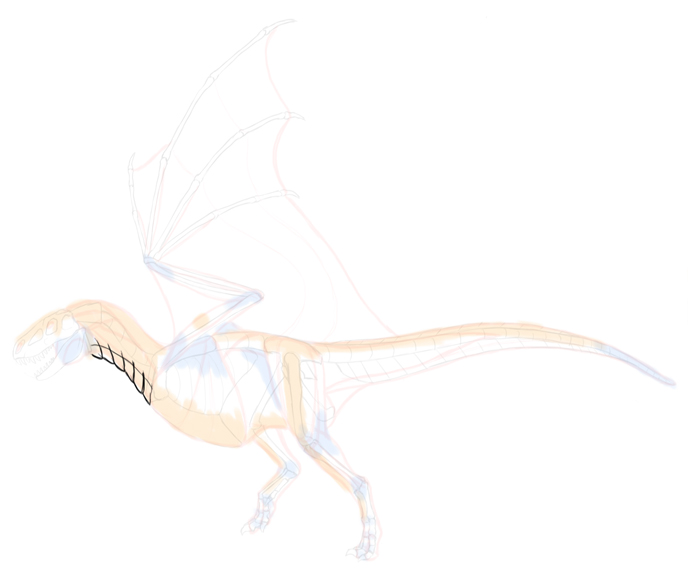
Cross this area with diagonal lines, creating scales roofing the throat.
Add together another line a scrap farther, and draw a line between these two. This will be another row of scales.
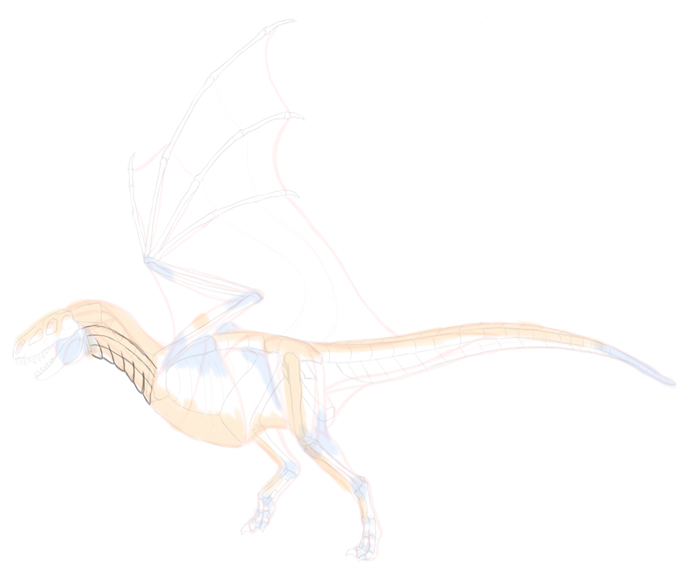
First draw i side of the row…
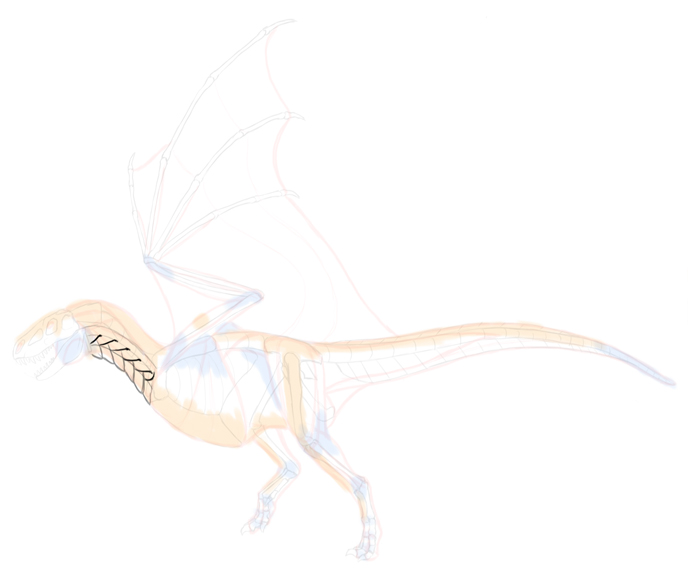
… and then the other. Pay attention to the serration between the rows of scales. This is what makes the design of scales expect orderly!
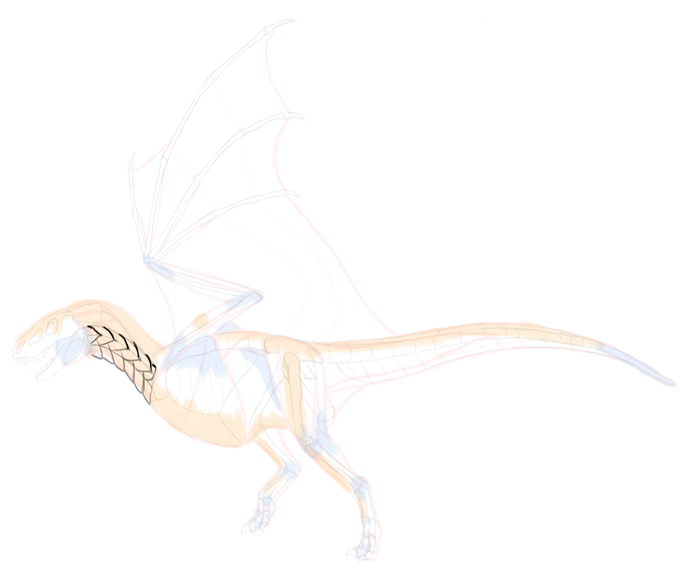
Add another row with the same method.
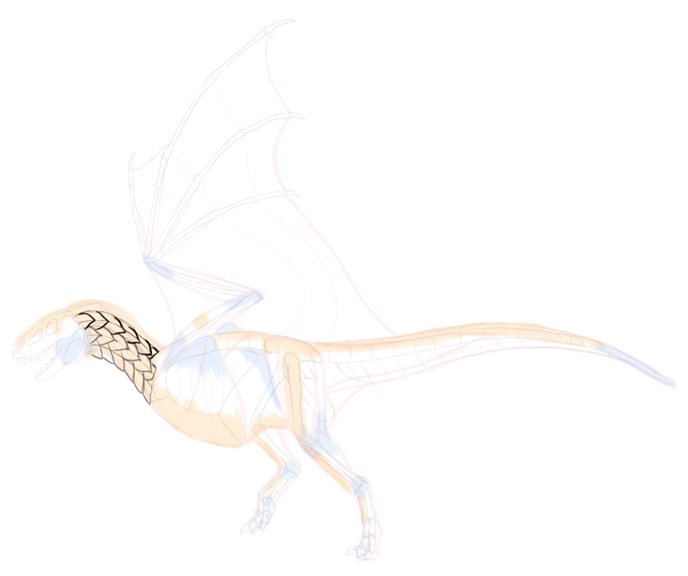
Once you come up closer to the acme of the neck, add a row of diagonal lines. Once more, pay attending to the rhythm of the neck—a bent cervix leads to outstretched scales.
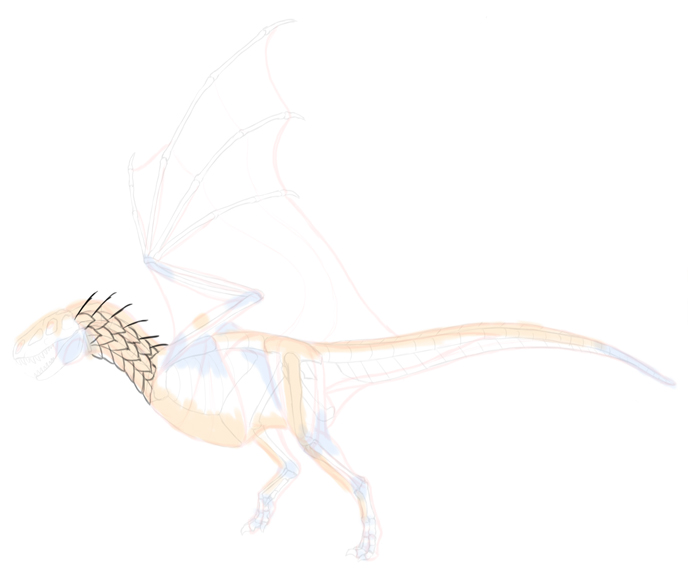
Close them to create scales.

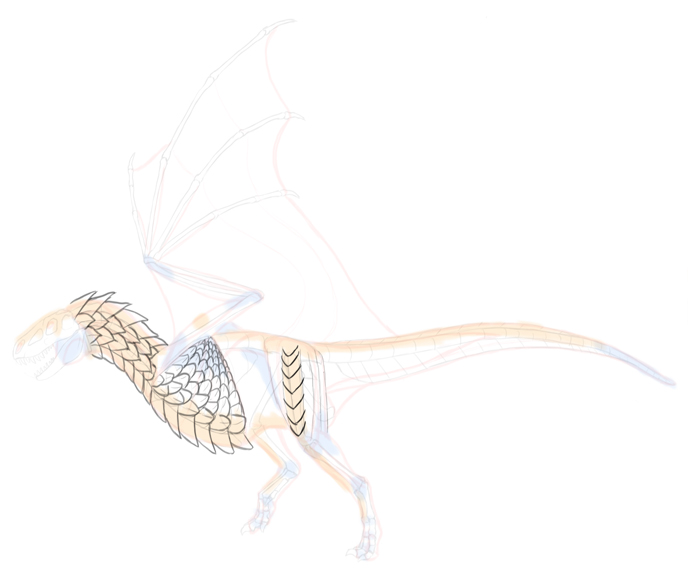
Nosotros can use this method to embrace all the body, except y'all demand to accommodate the shape of the rows to the form of the trunk. First the huge breast muscle…
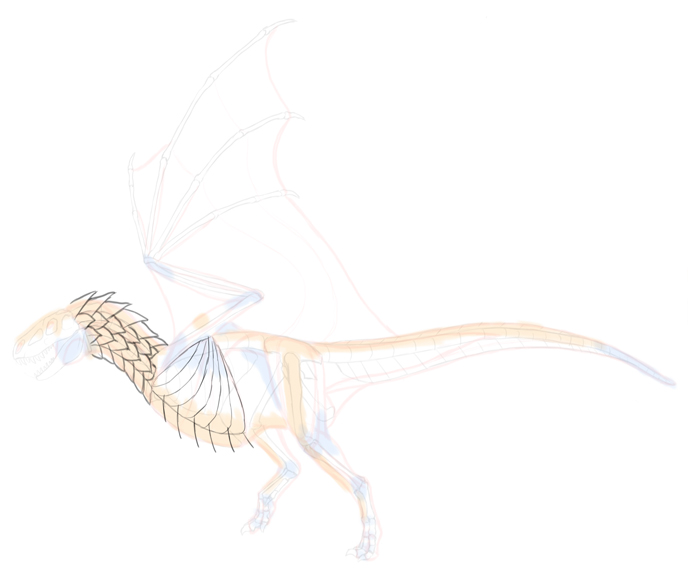
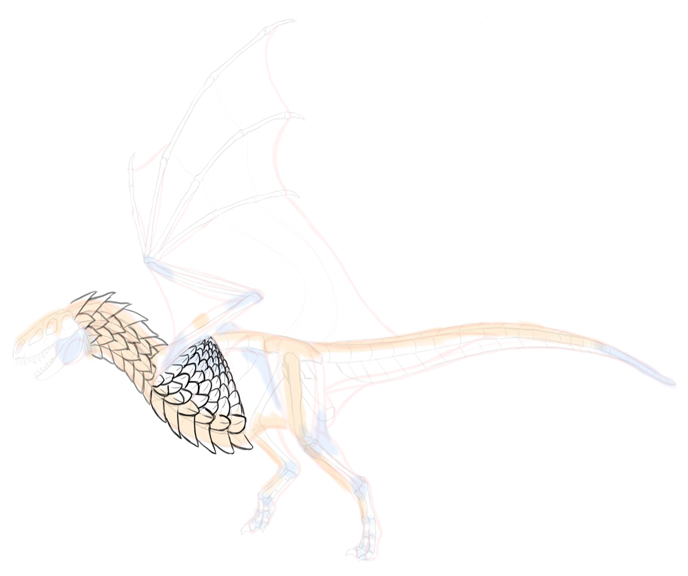
… and so the thigh.
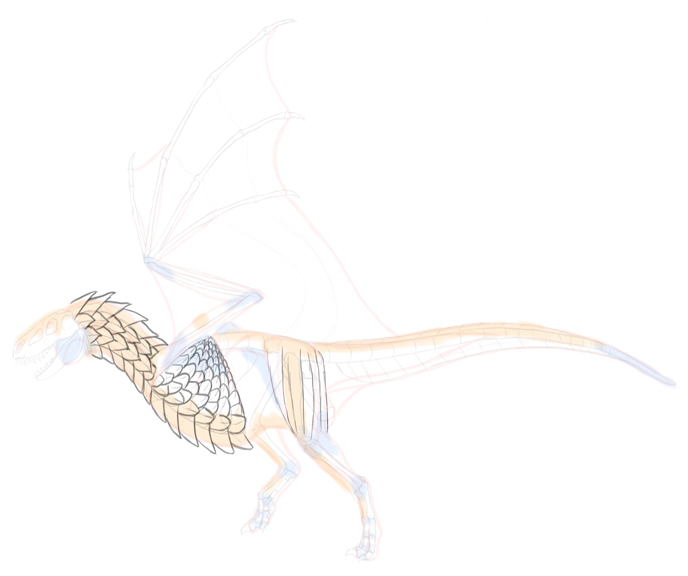
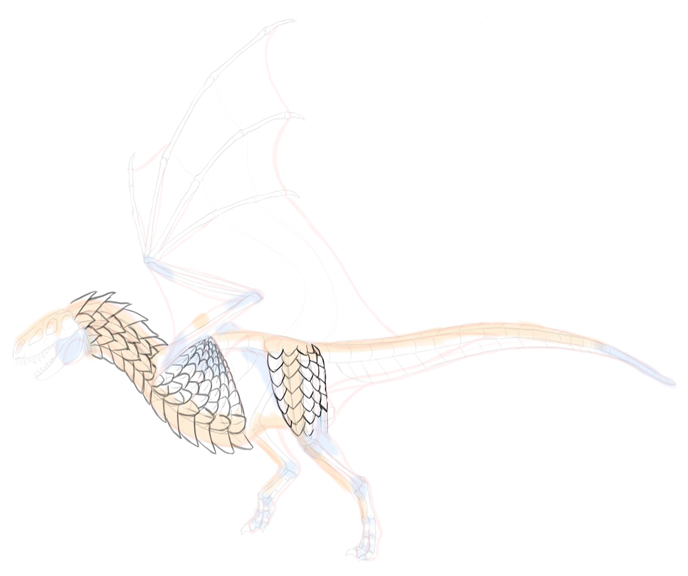
The tail is a practiced place to present the scales in all their glory.
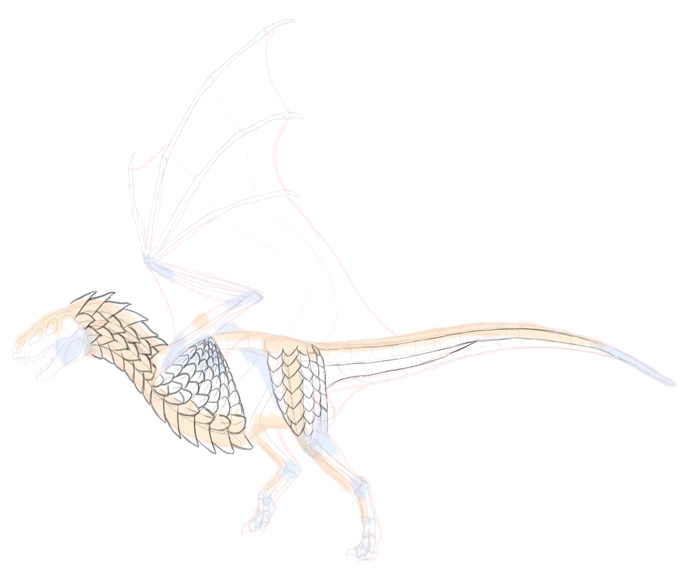
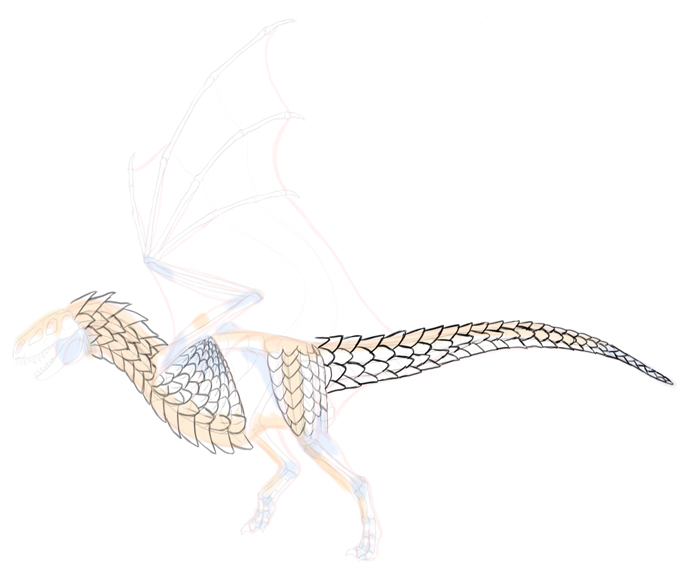
The legs comprise many flexible parts, so they must be covered with modest scales. The less uniform the scales are in terms of size, the more real the dragon will look. A creature covered with same-size scales look simply lazy!
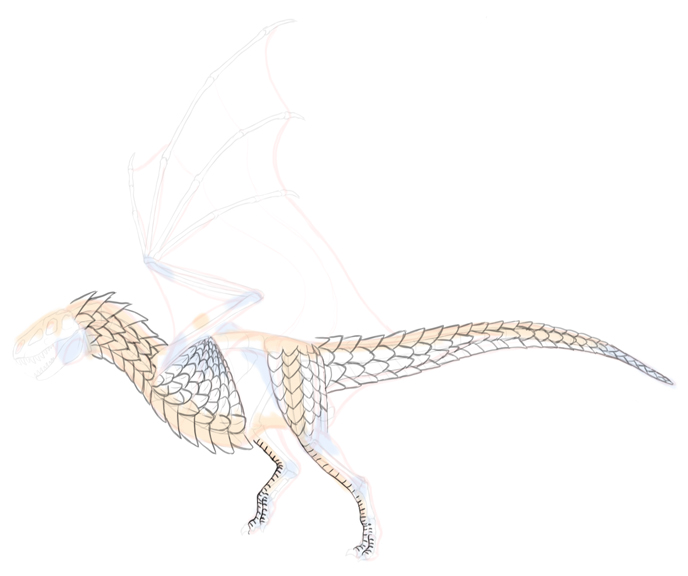
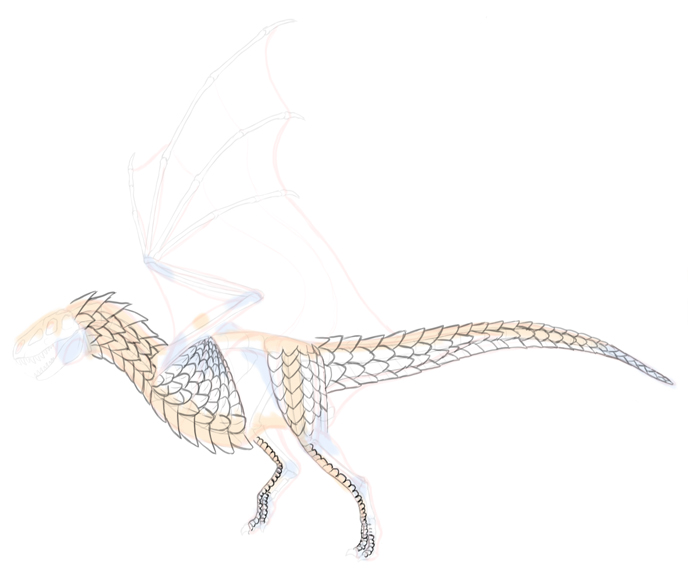
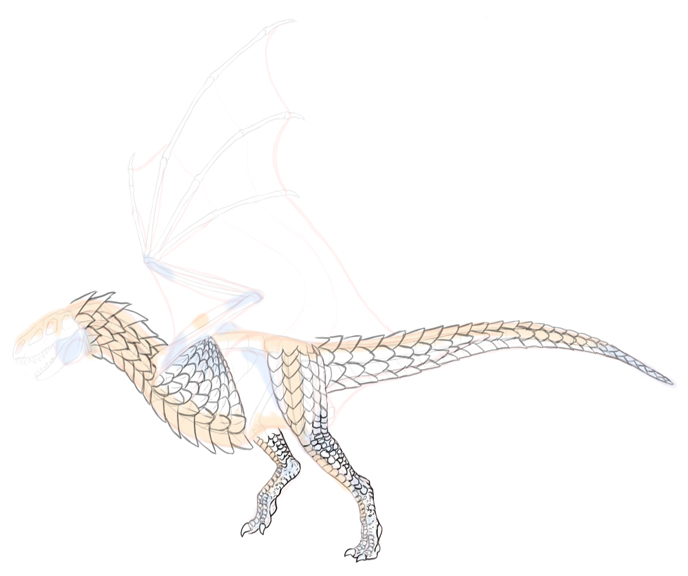
Finish the trunk by adjusting the mode of scales to the already drawn ones. All the parts should naturally alloy into each other.
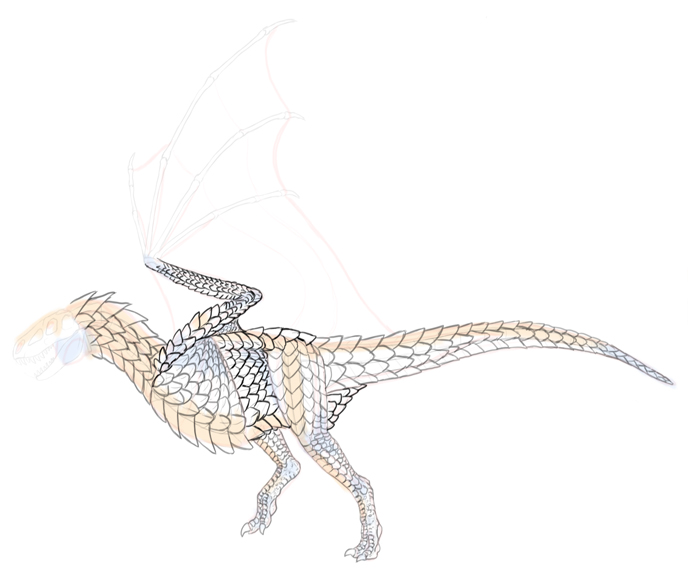
Pay special attention to the caput. The scales here should be detailed and carefully placed effectually the important parts (nose, optics, jaw musculus).
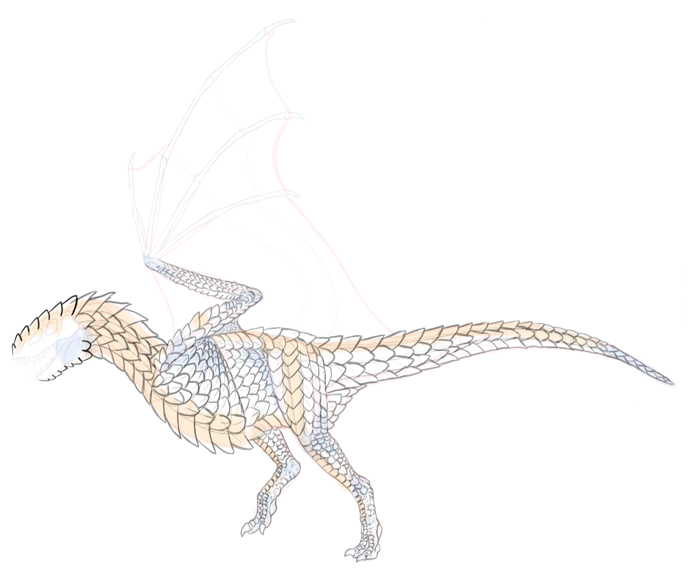
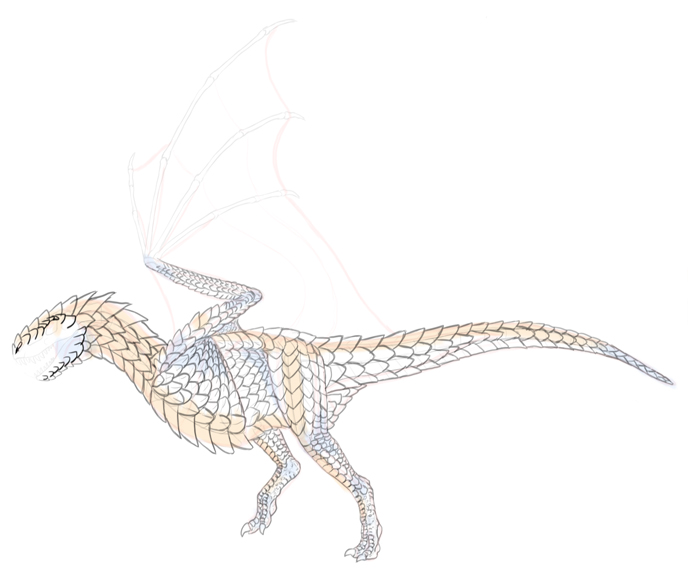
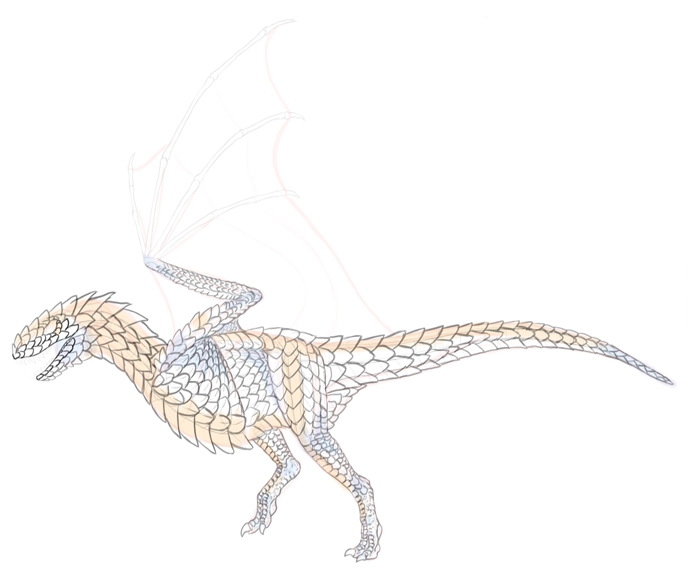
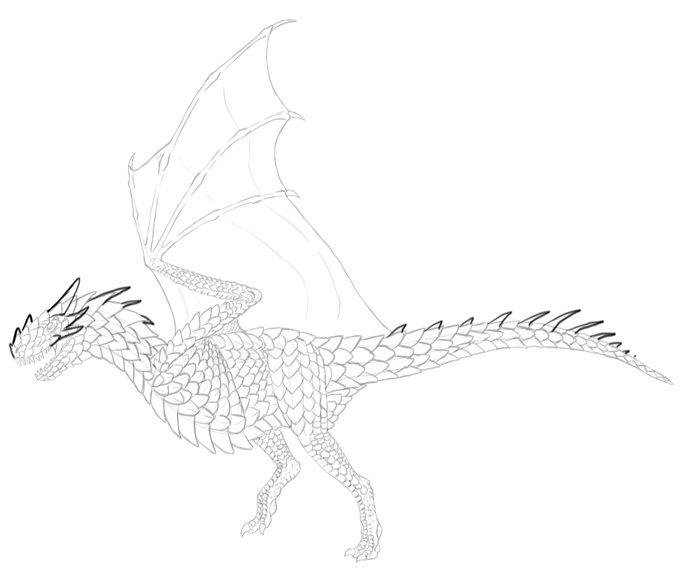
Here'southward our dragon in all its scaly glory!
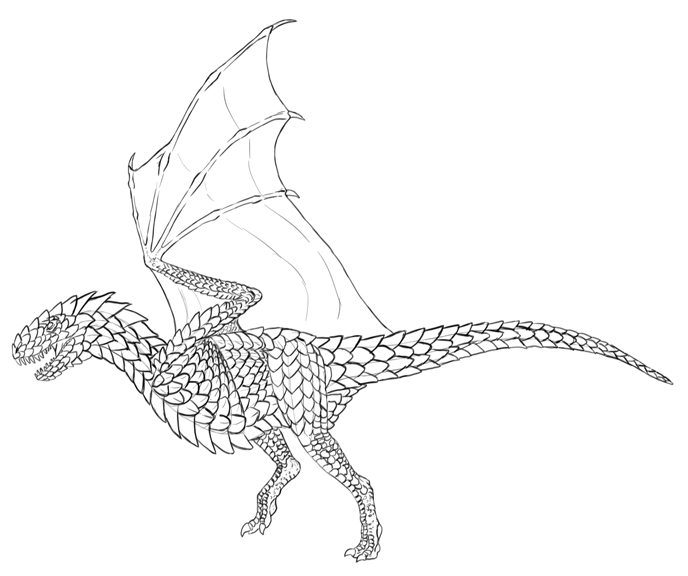
If y'all want to add realistic horns and spike, just modify certain scales. Spikes await the best when they grow in rows that beginning with small, insignificant ones.
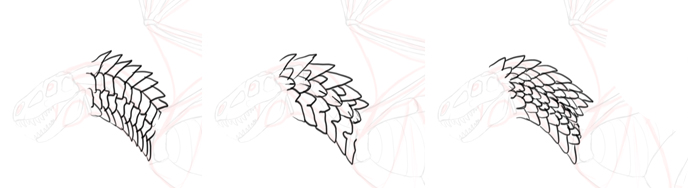
You don't need to describe the scales in the exact way I showed yous. The about important thing here is the serration betwixt the rows of scales. The actual shape of the scales is left to your imagination!
Dragon Eyes
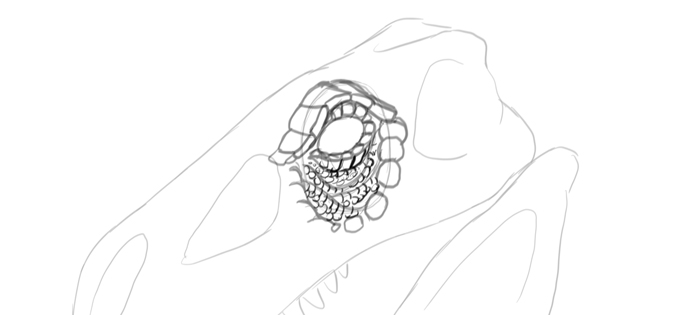
Eyes are very of import in adding the character to the dragon. However, it's not the eyes that really bear witness it, only the structures around information technology.
Kickoff by drawing the general shape of the middle. The smaller information technology is in comparison to the head, the bigger the dragon will look (reserve big eyes for baby dragons).
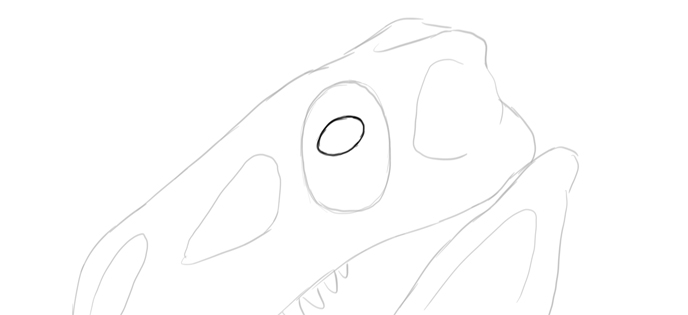
Add a brow that volition make information technology look angry. Brand the eyelids await thick by calculation lilliputian scales to their edges.
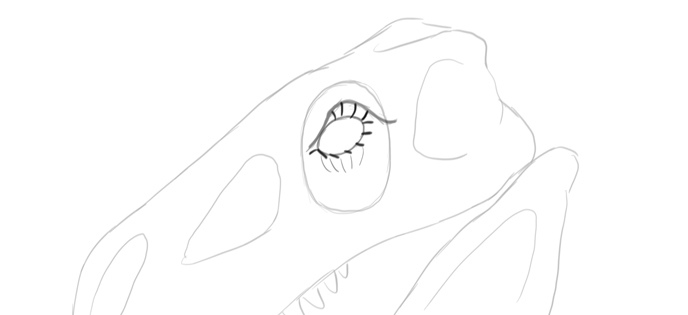
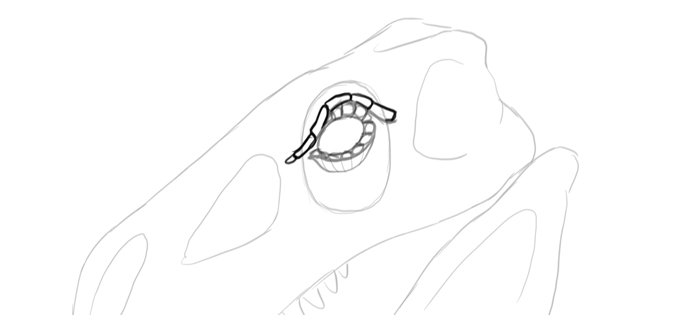
Justify the angry forehead past covering it with protective scales. You can add a row of scales around the eye socket to accentuate its shape.
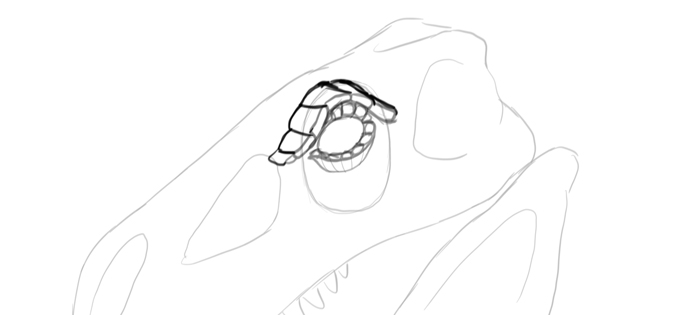
Add wrinkles in the soft area under the middle and cover them with footling scales. Stop the outline of the eye and add together the pupil.
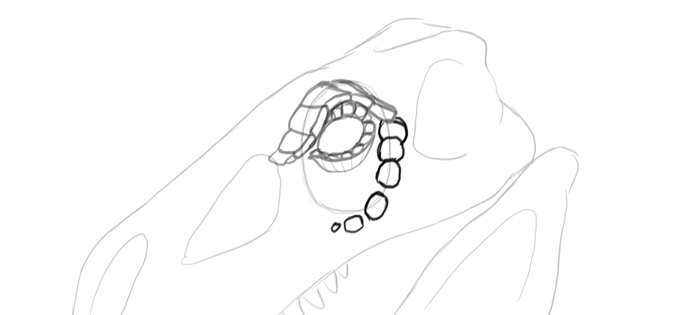
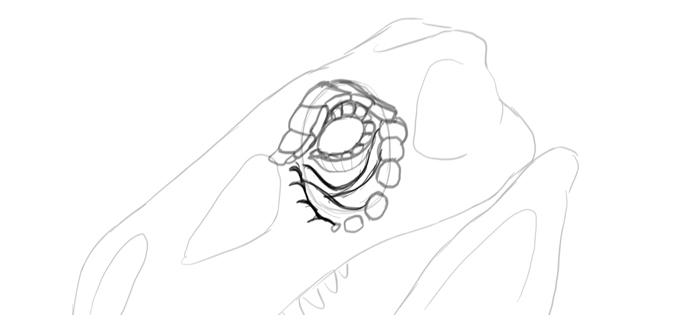
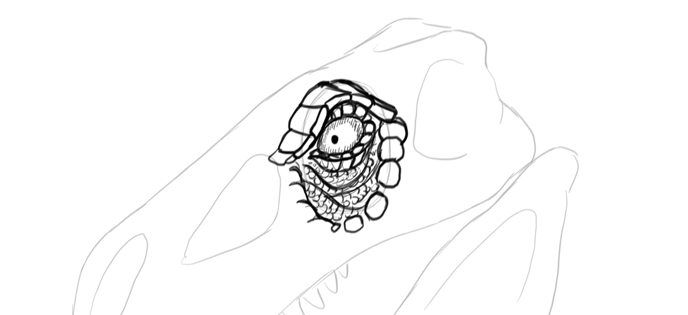
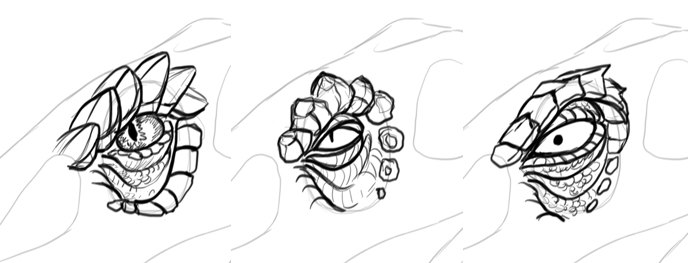
Of course, this isn't the only style you should go for! You can apply the same method to create different looks. Keep in mind that the educatee tin change everything—experiment with various shapes to achieve the effect you desire.
That's All!
Today you learned all the rules you need to create a realistic, plausible species of dragon. But go along in mind it's all most fun—feel complimentary to mix the features of saurischians and therapsids if your imagination allows so. Remember—it'due south u.s.a. who make dragons real!

Source: https://monikazagrobelna.com/2019/08/31/sketchbook-original-how-to-draw-dragons/
Posted by: goddardpaptur.blogspot.com
0 Response to "How To Draw A Small Dragon"
Post a Comment